Why We Started Anaxion AI: Rethinking How People Become Job-Ready
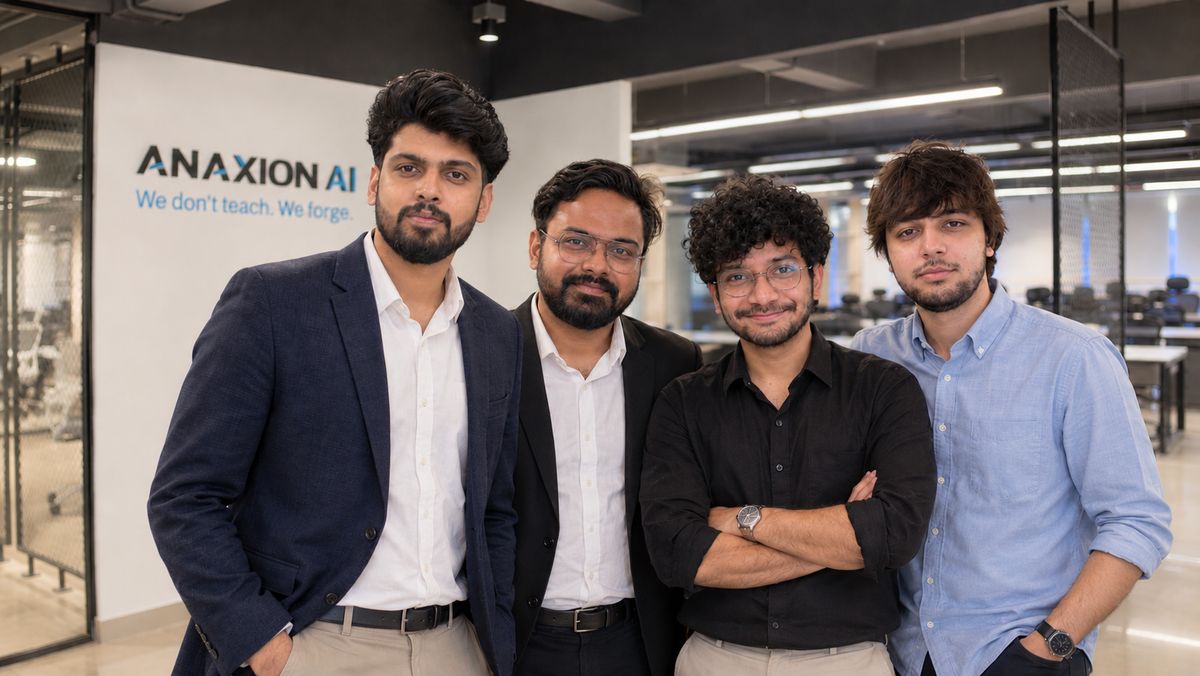
You cannot learn to build software by watching someone else do it, any more than you can learn to swim by watching the Olympic footage.
We learned this firsthand after years of training recent graduates for technical contract work: we tried video courses, we tried having them shadow senior developers, and we tried hand-holding them step-by-step—none of it produced people who could do the job independently. The breakthrough only happened when we stepped back and forced them to research on their own, break things, and struggle through their own mistakes. When generative AI emerged, the lightbulb went off: if an AI companion could guide students through that struggle and verify their logic without spoon-feeding the answers, we could scale the exact kind of learning that actually builds engineers.
That moment is the reason for this letter. We are the people behind Anaxion AI, and before you consider joining us or any other institute, we want you to know why we built it and what we can and cannot promise.
The Problem We Wanted to Address
There is a gap between understanding something and doing it alone. You can watch a lecture on data pipelines, follow along, and feel that it all makes sense. Then you open an empty editor with no instructor and nothing to copy, and it does not.
Bringing new graduates onto real client projects revealed two persistent problems. First was blank screen paralysis: candidates arrived with certificates for modern frameworks, but the moment they had to open an empty editor and build logic from scratch without a tutorial or code to copy, they froze. They had learned to transcribe solutions rather than think from first principles.
Second was the total inability to debug: conventional courses teach almost entirely on sanitized, “happy path” examples where everything runs smoothly. In production, most of the job is diagnosing broken builds, cryptic error logs, and failing pipelines. When unscripted errors appeared, these graduates hit an emotional wall—not because they lacked intelligence, but because no one had ever trained them to stay calm, isolate a bug, and systematically work their way out.
We want to be careful here. This is our observation, not a statistic. We are not claiming that a fixed percentage of graduates lack skills, and many colleges and course providers do excellent work. What we noticed was a pattern in the training we kept running into: a lot of attention on finishing a course, and less on whether the learner could build something, break it, fix it and explain it.
Why We Believe Learning Must Go Beyond Course Completion
A certificate shows that someone finished a course. It says very little about what happens when something fails at 6 p.m. and nobody is there to help. So we built Anaxion around four habits:
- Building
- Students work on technical exercises and projects at the centre, so they have real work to point to.
- Debugging
- Getting stuck is part of the work, and we want students to learn to get unstuck.
- Explaining
- If you cannot explain why you chose an approach, you probably do not fully own it. Interviewers tend to probe exactly this.
- Defending
- A mentor asks students to justify their decisions before they move on.
Here is a small example. Say a student writes a Python function that averages a list, and it returns 0.0 when the list is empty. Is that correct, or should it return None or raise an error?
def average(values):
    if not values:
        return 0.0  # or None? or raise an error?
    return sum(values) / len(values)
Neither answer is automatically right. What matters is that the student can say what the choice means for the code that calls the function. That is the kind of reasoning we want to train.
Our tracks run roughly 24 to 29 weeks, full-time and on site: Data Engineering, Generative AI and LLM Engineering, Full Stack Development (Python, MERN or MEAN), Data Analytics and Business Intelligence with Power BI, and Software Testing and QA Automation.
Why We Built Anaxion Around AI and Human Mentorship
AxTutor is our AI learning companion. Its job is to help a student understand a concept or debug a problem without simply handing over the finished answer. If a student's code fails, it should help them find the reason, not paste a corrected version.
AxGate is a technical progression checkpoint. Before a student moves forward, they demonstrate their work and explain their understanding to a mentor.
We use both because they do different jobs. AI is patient, always available, and good at answering the fifth “why” at midnight. It cannot reliably judge whether a student truly understands, and a person needs to make that call. So AI supports the learning, and a mentor decides when a student is ready to move on.
We believe this approach creates a strong foundation for learning, combining AI-powered guidance with human mentorship. As we continue to grow, we will keep learning from student experiences and refining our approach to make learning more effective.
Why We Chose Kochi
Kochi has become the natural destination where aspiring tech talent from across Kerala and beyond arrives to bridge the gap into the industry. Our decision to establish our centre in Kakkanad came down to one straightforward factor: proximity to where the jobs actually are. Kakkanad is Kerala's technology engine, housing the contiguous 500-acre tech corridor anchored by Infopark (Phases I and II), SmartCity Kochi, and the Cochin Special Economic Zone (CSEZ). By placing our centre right here, our students train within minutes of the engineering teams, companies, and hiring managers they are preparing to join.
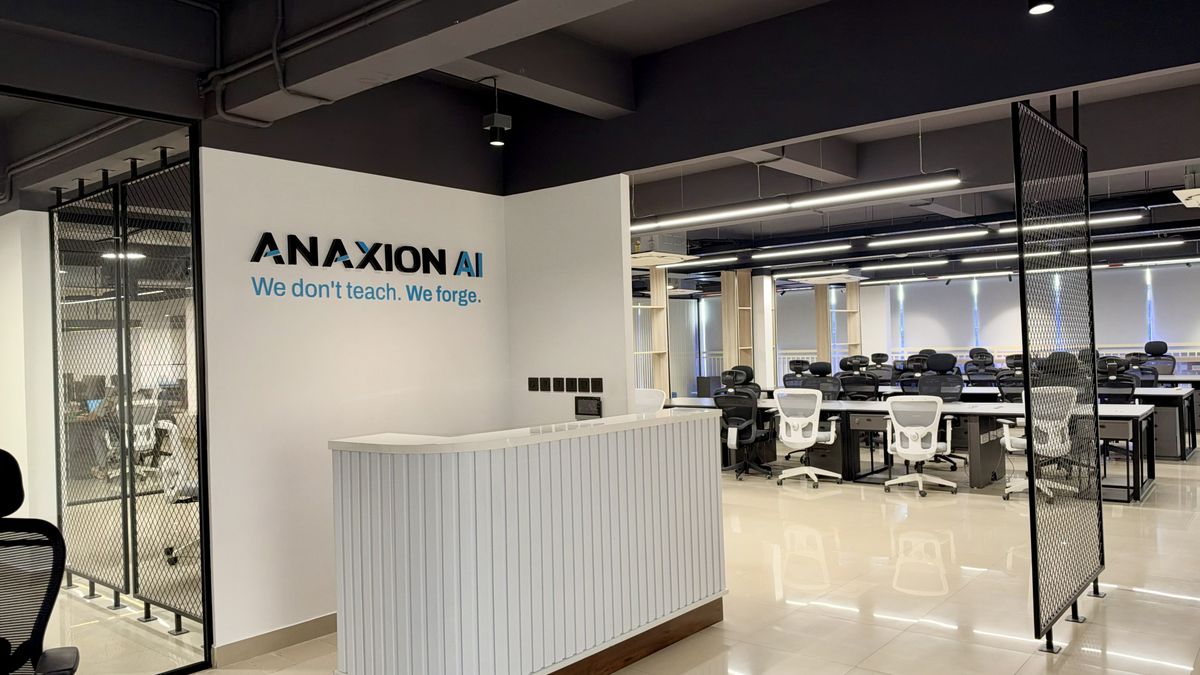
We chose to be physically present, in Kakkanad, because real engineering discipline is not built behind muted Zoom cameras. Learning to push through a frustrating bug, sitting side-by-side with peers facing the same roadblocks, and having an in-person mentor walk up to your screen to challenge your logic creates an accountability that remote courses simply cannot match. A mentor who can see a student's screen and face learns things a video call does not show.
What We Want Students to Leave With
These are our goals for the programme, not results we can promise every student:
- Stronger practical skills in their chosen track.
- Projects they can walk through and explain in their own words.
- A portfolio and resume that reflect what they actually built.
- Preparation for technical and HR interviews through practice.
Outcomes will vary by student, by effort and by the job market. We will publish real results when we have them, and not before.
Explore Anaxion AI
If this sounds like what you are looking for, start with the syllabus. Compare the tracks, and ask us anything that is not clear. If another institute fits you better, we would rather you chose that.